Marine electrical systems are essential to the safe and efficient operation of modern vessels. From power distribution and generator control to circuit monitoring and electrical fault detection, operators rely on clear visual information to understand system status and respond to changing operating conditions.
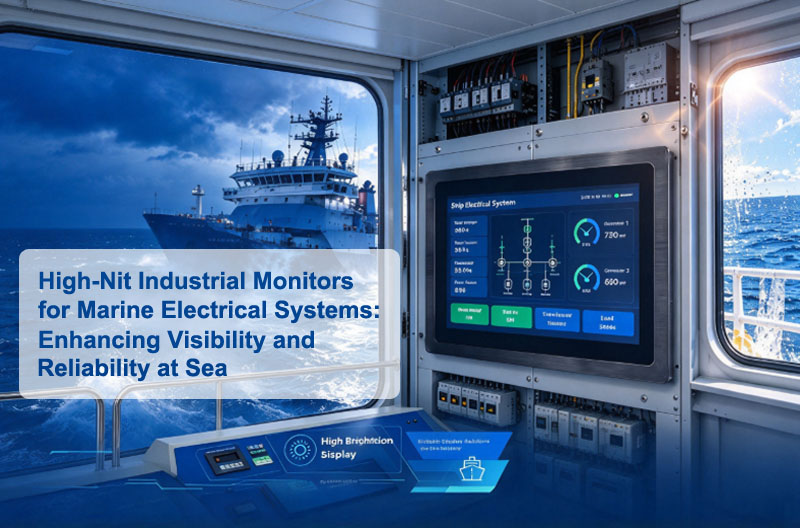
However, installing a display inside a ship's electrical cabinet presents several challenges. Strong ambient light from nearby windows can reduce screen readability, while humidity, temperature variations, condensation and continuous vessel vibration can affect display performance and long-term reliability.
A high-brightness industrial monitor designed for demanding environments provides a practical display solution for these applications. With appropriate optical bonding, environmental protection, rugged mechanical construction and configurable interfaces, an industrial display can help improve the visibility and usability of marine electrical monitoring systems.
Jawest provides industrial monitor solutions for applications requiring dependable visual interfaces, including marine equipment, electrical cabinets and industrial control systems. This article explores the key considerations when selecting a high-brightness industrial monitor for shipboard electrical applications.
1. Why Marine Electrical Cabinets Require Specialized Industrial Displays
Unlike displays installed in conventional office environments, monitors used on vessels must operate under a combination of environmental and operational constraints. Their performance depends not only on screen brightness but also on the installation location, enclosure design and surrounding conditions.
1.1 Bright Ambient Light Near Ship Windows
Electrical cabinets installed near bridge windows, control-room windows or other glazed areas may receive substantial daylight. Reflections and ambient illumination can reduce the contrast between displayed information and the screen background.
When operators need to read voltage measurements, current values, generator status, circuit diagrams or alarm notifications, poor visibility can make routine monitoring less convenient.
A high-brightness industrial monitor increases the luminance of the displayed image, helping maintain readability in bright environments. Depending on the installation, an anti-reflective surface treatment, suitable viewing angle and adjustable brightness may further improve the viewing experience.
The required brightness should be selected according to the actual ambient-light conditions, window orientation and display mounting position rather than relying on a single specification for every vessel.
1.2 High Humidity and Condensation
Marine environments frequently experience high humidity, temperature fluctuations and moisture exposure. When a display surface or internal optical components encounter conditions below the relevant dew point, condensation may form and affect visibility.
A cloudy screen can make small text, electrical diagrams and status indicators more difficult to distinguish.
For this reason, display selection should consider the optical stack, sealing structure and temperature conditions of the installation. Full optical bonding can eliminate the conventional air gap between the display panel and its front cover, reducing one potential source of internal condensation and improving optical performance.
However, optical bonding alone does not guarantee that the entire display will remain fog-free in every environment. Proper sealing, thermal management and installation design are also important.
1.3 Vibration and Mechanical Stress
Ships are subject to mechanical vibration and shock generated by engines, propulsion systems, pumps and other onboard equipment. Depending on the vessel and installation location, these conditions may affect display mounting, internal connections and long-term operating stability.
An industrial monitor with a robust enclosure, secure mounting structure and appropriately selected internal components is better suited to demanding operating conditions than a standard commercial display.
For marine electrical cabinets, the mounting method and vibration resistance of the complete installation should be considered together.
1.4 Continuous Operation and Maintenance Requirements
Electrical monitoring interfaces may be used throughout long operating shifts, making display stability and serviceability important selection criteria.
An industrial monitor intended for continuous operation should have an appropriate industrial LCD panel, reliable backlight design, compatible power input and suitable thermal management.
Choosing the right display at the system-design stage can also simplify cabinet integration and reduce the need for unnecessary modifications later.
2. How High-Brightness Industrial Monitors Improve Marine Display Visibility
Screen brightness is an important consideration when an electrical cabinet is positioned near a window or another strong light source. Nevertheless, effective readability depends on several interacting design factors.
- High-Luminance LCD Panels
- Full Optical Bonding for Improved Optical Clarity
- Anti-Reflective Treatment and Viewing Angle
- Adjustable Brightness
3. Environmental Protection for Demanding Marine Conditions
Visibility is only one part of marine display performance. The monitor must also be appropriate for the moisture, vibration and electrical conditions associated with its installation.
3.1 Dustproof and Waterproof Front Protection
For monitors mounted into electrical cabinets, a front-panel protection rating such as IP65 may be relevant where the selected model supports it. The rating applies to the specified protection boundary and does not automatically mean that every side, connector or the entire installed cabinet has the same protection level.
Engineers should verify the product's actual IP rating and ensure that mounting cutouts, gaskets, cable entries and connectors maintain the required protection after installation.
3.2 Moisture-Resistant Construction
Moisture protection is especially important in environments where humidity remains elevated for extended periods.Industrial-grade PCB design, appropriate component selection, protective coatings where specified, and a well-sealed enclosure can help improve resistance to moisture-related failures.
3.3 Vibration-Resistant Mechanical Design
For onboard equipment, vibration resistance depends on more than the monitor enclosure alone. The display assembly, mounting brackets, fasteners, connectors and cabinet structure all influence overall mechanical reliability. A suitable industrial monitor should be selected according to the vibration and shock conditions expected at its installation location.
4. Typical Applications in Shipboard Electrical Systems
High-brightness industrial monitors can serve as visual interfaces for different marine electrical monitoring and control applications when integrated with compatible computing or control equipment.
4.1 Power Distribution and Switchgear Monitoring
A monitor installed in a power distribution cabinet can display information supplied by the connected monitoring or automation system.
4.2 Generator and Power Management Systems
Generator monitoring systems may present operating parameters such as generator output, frequency, load percentage and running status. A suitably configured industrial monitor provides a visual interface through which operators can review this information and interact with compatible power management software. High brightness can be particularly useful when the electrical cabinet is installed in a brightly illuminated control area.
4.3 Engine-Room Auxiliary Equipment
Pumps, ventilation systems, cooling equipment and other auxiliary machinery may be monitored through local electrical control panels.
4.4 Marine Automation and Integrated Monitoring Consoles
On vessels with integrated automation systems, displays may serve as operator interfaces for power distribution, auxiliary equipment and other onboard subsystems.
5. Jawest Industrial Monitor Solutions for Marine Electrical Cabinets
Jawest develops industrial display products for industrial automation, embedded systems, transportation and other demanding applications.
For marine electrical cabinet projects, a suitable Jawest industrial monitor configuration can be evaluated according to the display size, brightness level, mounting method, interface requirements and environmental conditions of the installation.
Potential configuration considerations include:
High-brightness display options: Select an appropriate LCD luminance level for installations exposed to strong ambient light.
Optical bonding: Evaluate full optical bonding where improved optical clarity and reduced internal fogging risk are required.
Industrial enclosure design: Choose a suitable housing and front-panel sealing arrangement for the intended installation.
Flexible installation: Assess panel-mount, embedded or other supported mounting configurations for electrical cabinets and operator consoles.
Interface compatibility: Match video inputs, touch interfaces and power requirements to the connected electrical monitoring system.
Application-specific configuration: Review mechanical, environmental and functional requirements before finalizing the display specification.
6. Conclusion: Improving Marine Electrical Monitoring Through Better Display Design
Marine electrical systems depend on clear information and dependable operator interfaces. When an electrical cabinet is positioned near a ship's window, high ambient light can reduce readability, while humidity, condensation and vibration introduce additional design challenges.
A high-brightness industrial monitor, combined with appropriate optical bonding, reflection control, enclosure protection and mechanical design, can help address these challenges.
Contact Jawest to discuss your display size, brightness, optical bonding, mounting and interface requirements.