Introduction
The RK3566 industrial motherboard is rapidly gaining recognition across automation, embedded systems, and intelligent edge computing industries. Designed around Rockchip’s powerful and energy-efficient RK3566 System on Chip (SoC), these motherboards deliver robust performance with long-term reliability. This article explains what makes RK3566 industrial motherboards essential for modern industrial applications and how they optimize performance in demanding environments.
What Is the RK3566 Chip?
The Rockchip RK3566 is a quad-core 64-bit Arm Cortex-A55 processor with integrated GPU and multimedia accelerators. Key features include:
● Four Cortex-A55 cores up to 1.8 GHz
● Mali-G52 GPU for graphics acceleration
● Support for LPDDR4/4x and eMMC/SD storage
● Advanced I/O interfaces for industrial connectivity
This combination yields a balance of power efficiency and compute capability, making it ideal for embedded and industrial control systems.
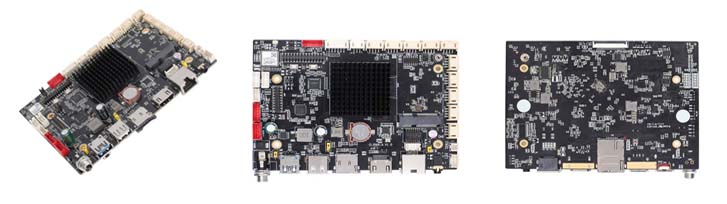
Key Features of RK3566 Industrial Motherboards
Industrial motherboards built around the RK3566 deliver a range of features optimized for industrial use:
1. High-Performance, Low-Power Processing
RK3566’s quad-core architecture offers efficient multi-threaded performance for real-time control, data processing, and analytics without high energy consumption—critical in industrial applications where power budgets and thermal constraints matter.
2. Rich I/O and Expansion Options
Typical RK3566 industrial boards provide:
Multiple USB interfaces (USB 3.0/2.0)
Gigabit Ethernet for network connectivity
Serial ports (RS-232/RS-485) for legacy industrial equipment
GPIO, SPI, I2C, and other programmable interfaces
Optional PCIe or M.2 expansion slots
These interfaces enable integration with sensors, actuators, and communication networks.
3. Integrated Graphics and Multimedia Support
With a Mali-G52 GPU, RK3566 boards support rich graphical interfaces, 4K video decoding, and multimedia capabilities. This is particularly useful for HMI panels, digital signage, and interactive kiosks.
4. Long-Term Availability and Industrial Grade Reliability
Industrial motherboards must operate under extended temperature ranges and long product lifecycles. RK3566-based boards are often designed with:
● Extended temperature tolerance (-20°C to +70°C)
● Stable supply commitments for long production runs
● Robust power regulation and protection
5. Operating System and Software Support
RK3566 boards support a range of operating systems, including:
Linux (Debian, Ubuntu)
Android (for multimedia and UI heavy applications)
These OS options allow developers to leverage open-source tools and customize solutions for specific use cases.
Typical Applications
Due to their versatility, RK3566 industrial motherboards are used in:
● Industrial Automation
Integrating PLC control, data acquisition, and machine monitoring with deterministic performance.
● Edge Computing and IoT Gateways
Processing sensor data locally to reduce cloud dependency, bandwidth usage, and latency.
● Human-Machine Interfaces (HMI)
Displaying real-time dashboards, control panels, and interactive interfaces with smooth graphics.
● Smart Retail and Digital Signage
Delivering high-resolution content and interactive media with stable operation.
● Transportation and Monitoring Systems
Enabling robust telematics, fleet management, and environmental monitoring.
Benefits of Choosing RK3566 Industrial Boards
Cost-Effective Performance
Compared with higher-power industrial CPUs, the RK3566 offers excellent performance per dollar with low operating costs.
Flexible Design Integration
Standardized interfaces and modular expansions allow adaptation to diverse industrial requirements.
Energy Efficiency
Low power draw extends device life, reduces cooling requirements, and lowers operating expenses.
Strong Community and Ecosystem Support
Rockchip’s ecosystem and open-source software support accelerate development cycles and technical problem resolution.
Conclusion
The RK3566 industrial motherboard stands out as a versatile, high-efficiency platform for embedded, automation, and edge computing applications. With its balanced performance, extensive I/O support, and industrial-grade reliability, it meets the evolving needs of manufacturers, integrators, and developers looking to deploy robust solutions. Whether powering an HMI panel, IoT gateway, or automated controller, these boards combine cost-effective compute with long-term operational stability.